

China Current Sensing Resistor: Innovations Driving Precision Measurement
2026-07-01
In China’s fast-evolving electronics landscape, precision current sensing has become the heartbeat of innovation—from electric vehicles to smart grids. At the core of this shift lies a quietly revolutionary component: the current sensing resistor. As designs demand tighter tolerances and higher power densities, Milliohm is redefining what’s possible, driving accuracy with materials and geometries that leave conventional shunts behind. This blog unpacks the breakthroughs reshaping the market and why China is at the center of the next leap in measurement technology.
The Evolution of Current Sensing Resistors in China's High-Tech Landscape
In the early days of China's electronics manufacturing boom, current sensing resistors were often an afterthought—generic, wire-wound components sourced from catalogs, chosen mainly for their wattage and tolerance. Engineers working on power supplies or motor drives would select parts based on rudimentary requirements, with little consideration for temperature drift or long-term stability. As the industry matured and moved beyond simple assembly towards genuine innovation, the limitations of these off-the-shelf resistors became impossible to ignore. The push for higher efficiency in consumer electronics and the first wave of electric vehicle development created a demand for components that could deliver precision measurements without compromising on size or cost.
This shift triggered a wave of homegrown R&D, with Chinese manufacturers beginning to develop their own metal alloy and thin-film technologies. The focus moved from meeting basic specs to optimizing for challenging real-world conditions—think high inrush currents in EV chargers or the constant thermal cycling inside server power stages. A new generation of resistors emerged, featuring lower temperature coefficients of resistance (TCR), improved power-to-size ratios, and novel package styles like the metal strip shunt. These weren't just copies of Japanese or European designs; they were engineered with specific local applications in mind, such as battery management systems for the booming e-bike and energy storage sectors.
Today, the evolution continues with current sensing resistors becoming enablers of smart functionality. Integrated current sensing modules, where the resistor and isolation amplifier sit in a single package, are gaining traction in industrial robotics and 5G infrastructure. Meanwhile, the relentless miniaturization trend has pushed companies to develop ultra-low-ohmic SMD parts that handle dozens of amps in footprints smaller than a grain of rice. This progress isn't happening in isolation—it's closely tied to China's broader ambitions in AI, autonomous driving, and renewable energy, where accurate current monitoring isn't just a performance metric but a safety imperative. As a result, what was once a humble passive component has become a strategic piece in the high-tech puzzle.
Breakthrough Materials Redefining Resistor Accuracy
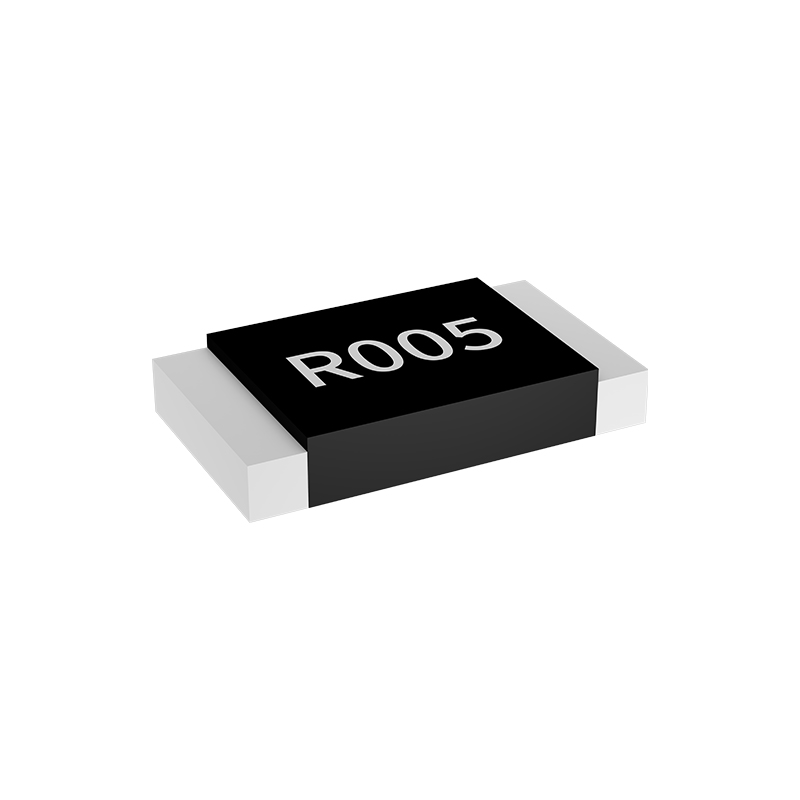
For decades, resistor accuracy hinged on trimming and temperature compensation—methods that pushed thin-film and metal-foil technologies to their physical limits. Now, a quiet revolution in materials science is rewriting those rules. Amorphous metal alloys, once relegated to transformer cores, are being reengineered with nano-crystalline structures that exhibit near-zero temperature coefficient of resistance (TCR) while slashing noise by an order of magnitude. Unlike conventional nichrome or tantalum nitride films, these materials rely on short-range atomic order to suppress electron scattering, yielding drift rates below 0.001% under full rated power—something previously only dreamed of in metrology labs.
Meanwhile, composite substrates are tackling a subtler enemy: mechanical stress. By embedding resistive elements within engineered ceramic matrices—think silicon nitride doped with graphene platelets—manufacturers can now decouple thermal expansion from resistance shifts. The result is a resistor that stays within ±0.005% of its nominal value even as the PCB flexes and temperature swings 40 °C mid-operation. This isn't just about tighter tolerances on a datasheet; it's about making precision invisible, so the engineer can focus on signal integrity rather than compensating for component quirks.
The real breakthrough, however, is happening at the atomic interface. ALD-deposited passivation layers just a few nanometers thick are turning moisture-induced drift into a relic. A new breed of tantalum nitride-on-sapphire resistors, hermetically sealed at the wafer level, now survives 1,000 hours of damp heat with shifts under 20 ppm—performance that rivals costly hermetic metal-can packages at a fraction of the size. These aren't evolutionary tweaks; they're foundational shifts that let precision circuits thrive outside temperature-controlled enclosures, from downhole drilling sensors to satellite power supplies where every microvolt matters.
Miniaturization Meets High Power: Design Advances from Chinese Manufacturers
The days of bulky power bricks hogging outlet space are fading, thanks to a wave of engineering ingenuity from China. Take the latest USB-C chargers: a pocket-sized unit now comfortably pushes 100W or more, enough to fast-charge a laptop. This didn't happen by accident. It's the result of relentless refinement in gallium nitride (GaN) transistor integration, planar transformer design, and 3D component stacking—techniques that cram more power-handling capability into a fraction of the volume. The real trick hasn't been just shrinking parts, but rethinking how they talk to each other, slashing electromagnetic interference while keeping heat build-up in check.
Heat has always been the villain when power density climbs. Chinese design teams have countered with clever thermal architectures that rival those in much larger equipment. Graphite films, vapor chambers barely thicker than a fingernail, and ceramic-filled thermal pads wick heat away from processor and MOSFET alike, letting the surface stay cool to the touch even when the internals are working full tilt. Some manufacturers have gone further, embedding temperature sensors directly into the GaN die itself for real-time power throttling—protecting the charger, and your device, without any noticeable slowdown.
These advances aren't limited to consumer gadgets. In industrial power supplies and electric vehicle on-board chargers, the same philosophy applies. Chinese firms have mastered high-frequency soft-switching topologies that once existed only in academic papers, pushing efficiency well beyond 95% while shrinking the entire module to fit behind a panel or under a scooter floorboard. It's a quiet revolution, but one that's reshaping what we expect from power electronics: more muscle, less mess.
Automotive Electrification Fueling Demand for Precision Shunts
The rapid shift toward vehicle electrification is placing unprecedented demands on current sensing technology, with precision shunts emerging as a critical component. Unlike traditional Hall‑effect sensors, shunt resistors offer inherent linearity and immunity to magnetic interference, making them ideal for the high‑voltage, high‑current environments found in electric vehicles. As automakers push for greater efficiency and range, the ability to measure current with extreme accuracy directly impacts battery management, motor control, and overall power distribution.
A key driver behind this demand is the need to monitor every milliamp flowing through the battery pack and power electronics. Precision shunts with resistance values in the micro‑ohm range minimize power loss while still delivering a measurable voltage drop. This delicate balance enables real‑time state‑of‑charge calculations, thermal management strategies, and fast fault detection—all of which are essential for both performance and safety. Moreover, the trend toward 800‑V architectures and silicon carbide inverters is accelerating the adoption of shunts that can withstand harsh thermal cycling without drift.
Looking ahead, the growth of autonomous driving functions and vehicle‑to‑grid capabilities will only intensify the reliance on these sensing elements. Shunt suppliers are responding with innovative materials and packaging that reduce parasitic inductance and improve long‑term stability. Such advancements are quietly enabling the next generation of efficient, reliable electric transportation.
Smart Manufacturing Elevates Quality Control in Resistor Production
The integration of smart manufacturing technologies has fundamentally reshaped how resistor production lines approach quality assurance. Instead of relying solely on post-production sampling, manufacturers now deploy embedded sensors and real-time analytics to monitor every critical parameter—from resistive paste deposition to laser trimming accuracy—as it happens. This shift not only catches deviations immediately but also builds a comprehensive data profile for each component, enabling predictive adjustments that prevent waste before it occurs.
Machine vision systems augmented with deep learning algorithms inspect micro-scale features such as electrode alignment and protective coating uniformity at speeds far beyond human capability. These systems learn from historical defect patterns, becoming more adept over time at flagging subtle anomalies that traditional rule-based inspections would miss. Consequently, the line between process control and final inspection blurs, creating a continuous feedback loop where manufacturing intelligence directly refines product consistency.
Perhaps most transformative is the ability to trace quality data back to exact production moments, raw material batches, and environmental conditions. When a deviation is detected, the system can autonomously isolate affected lots and trigger root cause analysis without halting the entire line. This granular traceability not only ensures tighter tolerance adherence but also equips engineers with actionable insights to optimize the entire manufacturing workflow, elevating overall reliability in resistors destined for demanding automotive, medical, or aerospace applications.
Emerging Applications in Renewable Energy and Industrial Automation
The fusion of renewable energy systems with industrial automation is reshaping how factories and power plants operate. Smart grids now rely on real-time data from wind and solar assets to balance loads, while automated control systems adjust energy consumption based on availability. This integration not only cuts carbon footprints but also slashes operational costs by predicting maintenance needs and optimizing power usage without human intervention.
Beyond large-scale industry, micro-automation is finding its way into decentralized energy setups. Small manufacturers are using programmable logic controllers tied to rooftop solar panels and battery storage to manage their own microgrids. These systems can island themselves during grid outages, keeping critical processes running. The result is a more resilient industrial landscape where clean energy and smart automation work hand in hand to buffer against supply chain disruptions.
Another exciting frontier is the use of autonomous robots and drones in maintaining renewable energy infrastructure. Automated inspection drones now patrol offshore wind farms, spotting blade erosion early, while ground robots clean solar arrays in desert installations without water. These innovations reduce the need for human crews in hazardous environments and keep energy yield high, proving that automation is not just about efficiency—it’s about enabling renewables to scale sustainably.
FAQ
Chinese manufacturers have pioneered the use of advanced metal alloy composites like copper-manganese-nickel, which reduce temperature coefficient of resistance (TCR) to as low as ±15 ppm/°C. This results in minimal drift across wide operating temperatures, crucial for precision measurement in automotive and industrial systems.
Innovations include thick-film on ceramic substrates with optimized thermal management, allowing power ratings exceeding 5W in compact 2512 packages. Some designs incorporate kelvin connections directly into the resistive layer, reducing lead inductance and improving accuracy at high frequencies.
Precision laser trimming systems, often developed in-house, enable resistance values to be adjusted within ±0.1% tolerances before final assembly. This process is fully automated to ensure consistency while maintaining low inductance, critical for dynamic current sensing in battery management systems.
Many Chinese suppliers have adopted flip-chip-style designs with electrode pads on the bottom surface, eliminating bond wires and reducing parasitic inductance. This allows for more stable readings in fast-switching circuits and improves long-term reliability under vibration.
Look for AEC-Q200 for automotive grade, ISO 9001 and IATF 16949 certifications, plus RoHS and REACH compliance. Some advanced manufacturers also provide full PPAP documentation and are compliant with UL 94 V-0 for flammability, highlighting their focus on international standards.
By using low TCR materials and optimizing the resistive element geometry, some designs achieve power derating curves that allow stable operation up to 170°C. Enhanced copper-electrode designs and high-temperature soldering processes reduce internal thermal resistance, minimizing hot spots.
Shunt-style resistors with separate current and voltage terminals, often made with electron-beam welded joints, can handle continuous currents up to 400A in a standard 2512 package. This is enabled by low-ohmic values down to 0.1mΩ alongside ultra-low inductance, crucial for industrial motor drives.
Rigorous testing includes biased humidity (85°C/85% RH) for 1000 hours, thermal shock cycling from -55°C to 150°C, and continuous load life tests at rated power for 2000 hours. The best performers show resistance shifts of less than 0.5%, ensuring decade-long accuracy in field applications.
Conclusion
The landscape of current sensing resistors in China has undergone a remarkable transformation, driven by the twin demands of precision and reliability in high-tech sectors. From their early adoption in basic circuitry to today's role in cutting-edge systems, these components have evolved through breakthroughs in materials science—such as advanced metal alloys and composite structures—that push accuracy boundaries while resisting thermal drift. Chinese manufacturers have also achieved a delicate balance between miniaturization and high power handling, enabling compact designs without sacrificing performance. This progress is heavily fueled by the rapid electrification of vehicles, where precision shunts are essential for battery management and motor control, demanding ever-tighter tolerances and long-term stability.
Behind these advances lies a quiet revolution in production: smart manufacturing has elevated quality control, using automated optical inspection and real-time process adjustments to slash defect rates and ensure batch consistency. Meanwhile, the technology is finding fertile ground in emerging applications. Renewable energy systems rely on accurate current monitoring for maximum power point tracking and grid stability, while industrial automation leverages smart current sensing for predictive maintenance and energy efficiency. Together, these innovations are not just refining measurement—they are enabling a new era of intelligent, efficient, and sustainable energy use across industries.
Contact Us
Contact Person: Yuying Gao
Email: [email protected]
Tel/WhatsApp: +86 18926013721
Website: https://en.milliohm.net/