

MNO Core Network Solution Platform: Pioneering Agile and Scalable Connectivity for Next-Gen Mobile Networks
2026-05-12
As mobile networks evolve toward 5G and beyond, operators face mounting pressure to deliver agile, scalable connectivity without compromising on reliability. Traditional core networks often stifle innovation with rigid architectures, but there’s a smarter path forward. At the heart of this transformation lies IPLOOK’s MNO Core Network Solution Platform—a disruptive approach that redefines how next-gen networks are built and scaled. Whether it’s rapidly deploying new services or seamlessly expanding capacity, this platform challenges the status quo with cloud-native flexibility and a relentless focus on performance. In this post, we’ll explore the architectural breakthroughs that make IPLOOK’s platform a game-changer for mobile operators striving to stay ahead in a hyperconnected world.
Untying the Knots of Legacy Core Networks
Legacy core networks often resemble a tangled web of protocols and hardware that evolved piecemeal over decades. Each new service or capacity upgrade added another layer of complexity, turning what should be a streamlined backbone into a rigid, difficult-to-manage system. Untying these knots starts with recognizing that the old approach—bolting on box after box—is no longer sustainable. Teams spend far too much energy on firefighting and manual configuration, leaving little room for innovation.
The shift toward disaggregation and software-defined principles offers a practical path forward. Rather than ripping out everything at once, operators are selectively decoupling control and data planes, virtualizing functions where it makes sense, and introducing automation to eliminate repetitive tasks. This gradual modernization reduces risk and allows the network to adapt without the paralysis that typically accompanies large-scale transformations.
Perhaps the biggest challenge lies not in the technology but in overcoming institutional inertia. Long-standing processes, siloed teams, and a culture of “if it isn’t broken, don’t fix it” keep the knots firmly in place. Successful untangling demands a shift in mindset—embracing continuous improvement, cross-functional collaboration, and a willingness to treat the network as a dynamic platform rather than a static utility. Only then does the core network become an enabler instead of an obstacle.
Agility Without the Heavy Lifting
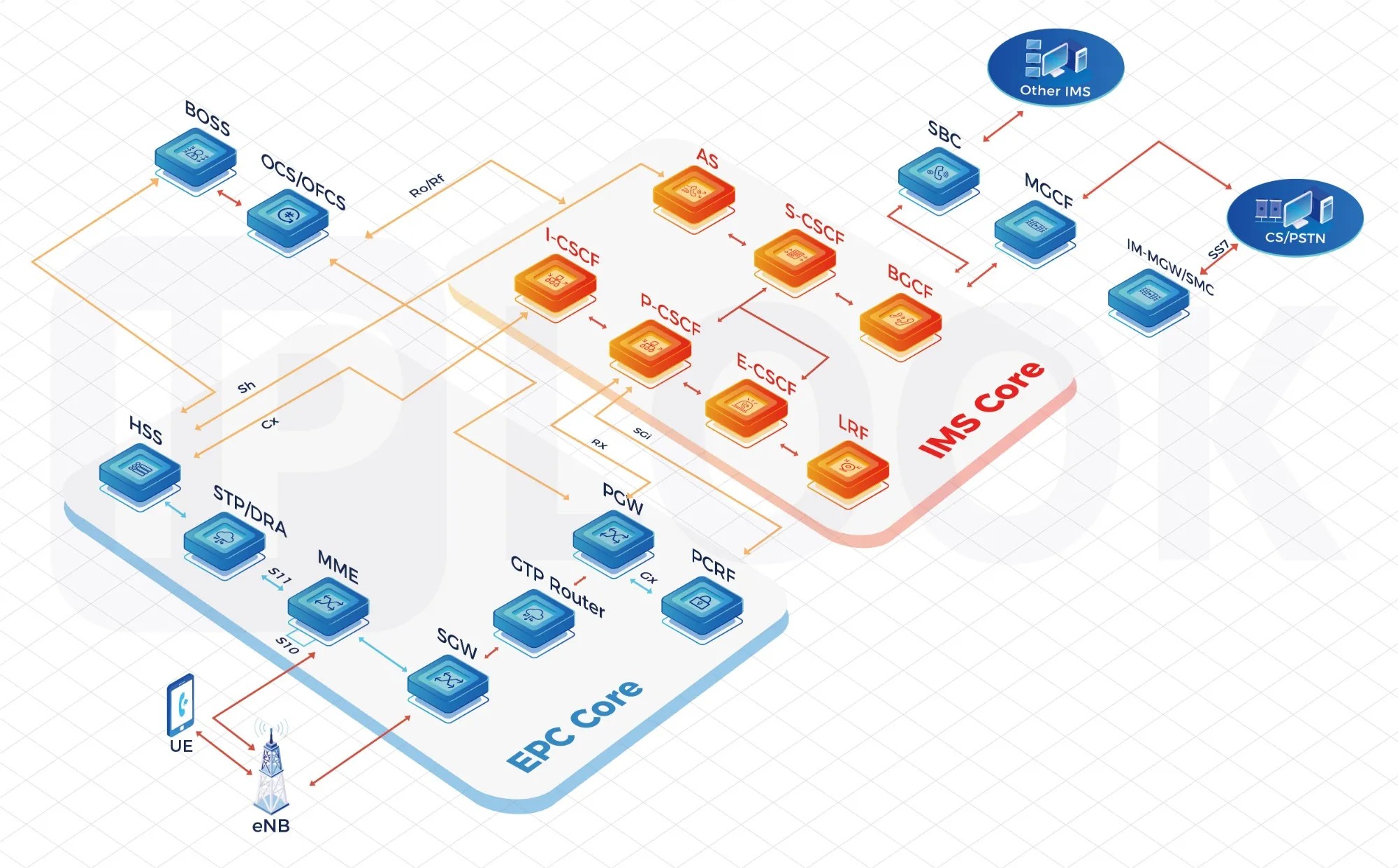
Agility isn't about bulky frameworks or endless setup. It's about making smart, incremental changes that compound over time. We've stripped away the unnecessary so you can adapt faster, pivot easier, and deliver value without being weighed down by process.
Think lightweight decision-making, clear communication, and tools that get out of your way. Our approach focuses on real collaboration over rigid rituals, letting your team respond to change without the overhead traditionally associated with agile transformations.
The result? Faster cycles, happier teams, and a workflow that actually flows. No heavy lifting required.
Scaling on Demand, Not on Guesswork
In a world where traffic spikes can arrive without warning, traditional scaling models often buckle under pressure. We’ve abandoned the approach of pre-provisioning resources “just in case,” which either leaves you paying for idle capacity or scrambling when demand exceeds forecasts. Instead, our platform monitors actual usage patterns in real time, allowing infrastructure to expand or contract seamlessly as real users interact with your applications. No more relying on static thresholds or rough estimates—the system breathes with the demand curve, ensuring that every transaction is served without delay, and every dollar spent ties directly to genuine need.
What makes on-demand scaling truly effective is the combination of event-driven automation and granular metrics. We track not just raw request counts but the nuanced behavior behind them: think database query complexity, third-party API latency, and session duration shifts. When the platform detects a sustained uptick in these signals, it intelligently distributes load across fresh compute nodes and pre-warmed caches, all without human intervention. This means your team can stop staring at dashboards debating whether to spin up more servers. The guesswork vanishes—replaced by a self-correcting mechanism that tirelessly adapts, freeing you to focus on building features instead of firefighting resource constraints.
Perhaps the most overlooked advantage is how this approach reshapes cost management. By aligning resource allocation with real-time demand, you eliminate the need for capacity buffers that sit idle most of the time. The billing model becomes transparent: you only incur costs for the compute, storage, and bandwidth that each active user session actually consumes. Overcommitting is a relic of the past; underprovisioning no longer threatens your customer experience. It’s a disciplined, data-informed rhythm that keeps both your application performance and your budget in healthy, predictable balance.
Where Virtualization Meets Real-World Demands
Virtualization often conjures images of sophisticated labs and endless server racks, but its true value emerges when it steps out of the abstract and into the trenches of daily operations. Businesses don't need another layer of complexity; they need systems that bend to their workflows, not the other way around. Modern virtualization thrives precisely where the rubber meets the road—supporting unpredictable workloads, enabling rapid deployment in under-resourced environments, and keeping critical processes alive when physical infrastructure teeters on the edge.
Consider the manufacturing floor where legacy machinery and cutting-edge analytics must coexist. Virtualization here isn't about consolidating servers for the sake of it; it's about wrapping old iron in a digital skin that allows real-time monitoring without ripping out proven equipment. Similarly, in healthcare, patient data flows through virtualized environments that must balance immediate access with ironclad privacy—a demand that no generic cloud setup can address without careful tuning. These scenarios demand more than textbook implementations; they require virtualization that listens to the ground truth of each industry.
The push toward edge computing has further redefined what practical virtualization looks like. Instead of centralized data centers, compute power sits in retail stores, oil rigs, and moving vehicles, where latency is a luxury and bandwidth a distant promise. Virtualization that meets these constraints doesn't just shrink footprints—it rethinks resource allocation from the kernel up, ensuring that a point-of-sale system doesn't stall when the connection flickers. Ultimately, the meeting point between virtualization and real-world demands is a place of constant negotiation, where technology bends to human and operational realities, not the other way around.
Built for Tomorrow’s Subscriber, Not Yesterday’s
Modern audiences don’t just consume content—they interact with it, remix it, and expect platforms to evolve alongside their habits. We’ve designed an experience that adapts to these fluid behaviors, not the rigid patterns of a decade ago. From dynamic curation that learns what you actually care about, to interfaces that respect your time rather than demand it, every layer is built around real human rhythms—not outdated engagement metrics.
This means ditching the one-size-fits-all approach that still plagues most platforms. Instead of forcing everyone into the same feed structure, we let subscribers define their own boundaries: what surfaces, what stays buried, and how frequently they engage. It’s subscription that feels less like a broadcast and more like a conversation, shaped by the quiet signals users give off when they’re genuinely interested—not just when they click.
The result is a system that gets smarter without getting creepier. It remembers preferences without hoarding data, refines recommendations without chasing trends, and ultimately treats the subscriber as a partner in the experience, not just a target. Because tomorrow’s subscriber won’t settle for passive consumption—they’ll expect tools that grow with them, not around them.
The Quiet Architecture Behind Seamless Mobility
It’s easy to overlook the delicate choreography that unfolds every time you step onto a subway car or merge onto a highway. Beneath the surface, a web of sensors, algorithms, and meticulously planned routes hums in near-silence, adjusting traffic lights in real time, rerouting buses based on demand, and even predicting breakdowns before they happen. This quiet infrastructure isn’t about flashy innovation—it’s about making sure the city breathes without you ever noticing the effort.
What’s surprising is how much of this seamless experience hinges on older, reinvented systems. Train signaling that evolved from 19th-century block controls now integrates with machine learning to shave seconds off headways. Pedestrian flows are modeled not by sprawling control centers, but by small teams tweaking curb heights and crossing timings based on subtle behavioral cues. The architecture isn’t just digital—it’s physical, social, and stubbornly analog where it needs to be.
Perhaps the real marker of success is when failures feel almost shocking. A delay on a typically flawless line reminds us how much we’ve come to expect movement without friction. That expectation, built quietly over decades, is a testament to the planners who prioritized resilience over glory, weaving mobility into the fabric of daily life so tightly that its seams are invisible.
FAQ
It's a fully virtualized core network stack built for cloud-native environments, letting operators run critical functions like subscriber management, policy control, and packet routing on standard hardware rather than proprietary boxes. This shifts them from rigid, cost-heavy architectures to a model where they can spin up, scale, or update network slices in minutes.
It uses fine-grained auto-scaling at the microservice level. When a spike hits—say a live event streams 4K to thousands—the orchestrator instantly allocates extra vCPU and memory to the affected components, then scales back once demand normalizes. This prevents bottlenecks and keeps latency low without overprovisioning.
Most solutions force a choice between cloud agility and carrier-grade reliability. This one embeds state management directly into Kubernetes, using CRDs to map 3GPP network functions to cloud primitives. That means failovers happen in seconds with zero session loss, which typical stateless designs struggle to achieve.
Absolutely. It runs a converged policy framework that can simultaneously anchor LTE EPC and 5GC control planes. Operators can gradually migrate subscribers by steering traffic through a common user plane, avoiding the cost and complexity of a rip-and-replace transition.
Once a service template is defined—say for a private enterprise 5G slice—provisioning across the core takes under 90 seconds. The CI/CD pipeline pushes configuration changes to live instances without a maintenance window, so marketing trials or custom enterprise offers can go from concept to customer in days, not months.
Every inter-NF communication is mutually authenticated via TLS 1.3 with hardware-rooted attestation. The platform also runs a real-time anomaly engine that profiles normal signaling patterns and quarantines suspicious traffic—like signaling storms from a compromised IoT device—before it touches the subscriber database.
Conclusion
Mobile network operators have long struggled with core networks that were never designed for today’s unpredictable traffic patterns or the pace of service innovation. The MNO Core Network Solution Platform untangles those legacy constraints, replacing rigid, hardware-bound architectures with a software-defined core that moves at the speed of the market. Instead of forcing teams through cumbersome provisioning cycles, it bakes agility into everyday operations—new services, policies, and slices roll out in minutes, not months. That agility isn’t just about speed; it’s about precision. The platform’s intelligent scaling engines read actual demand signals rather than relying on overprovisioned forecasts, so capacity flexes up and down without waste. Underpinning all of this is a virtualization layer that isn’t a science project. It maps directly to real-world deployment models—centralized, distributed, or edge—and integrates with existing infrastructure so operators can transition without ripping out what already works.
Beyond fixing today’s pain points, the platform is built for the subscriber who expects seamless, context-aware connectivity across urban canyons, stadiums, and transit corridors. It anticipates how people actually use the network rather than forcing them into outdated profiles. The result is a quiet, invisible architecture: no dropped sessions during handoffs, no latency spikes under load, just reliable mobility that users never have to think about. For operators, that means a core network that finally aligns with both their business ambitions and their subscribers’ daily lives, all while keeping operational complexity in check.
Contact Us
Contact Person: Shimmy
Email: [email protected]
Tel/WhatsApp: 85253392231
Website: https://www.iplook.com